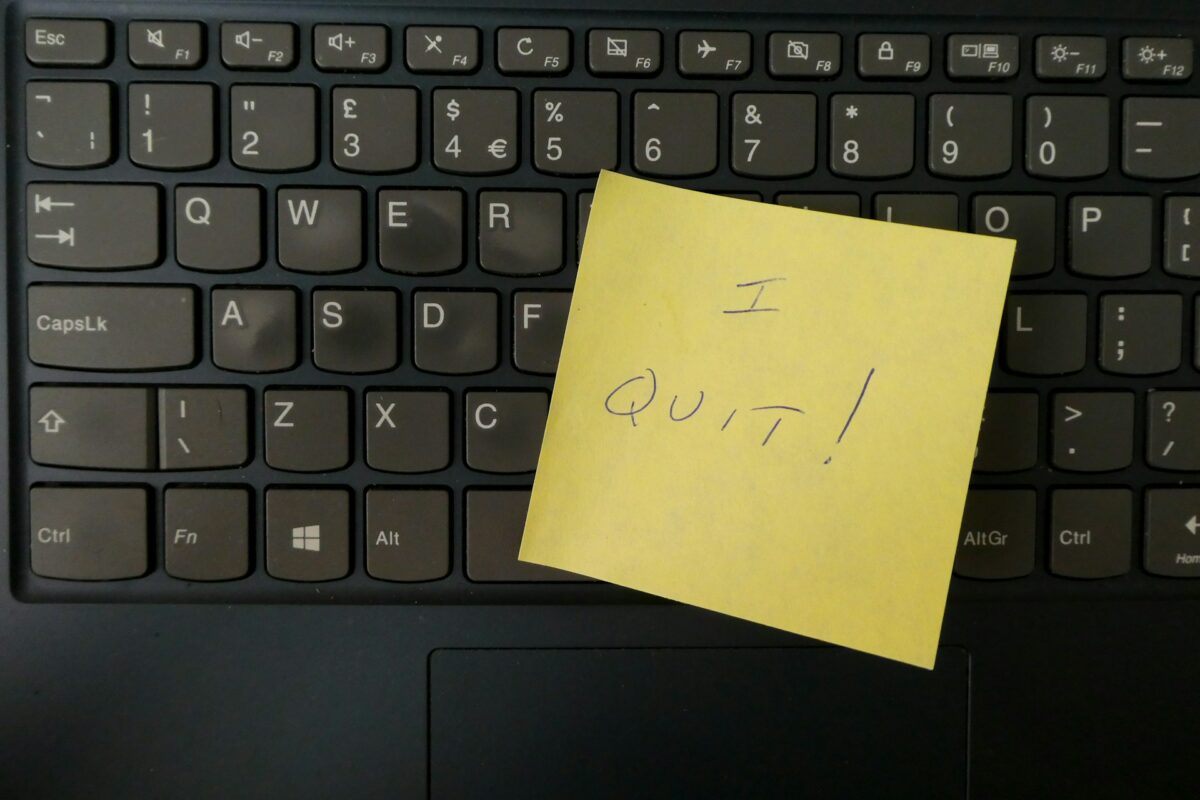
The part of a job change nobody prepares you for — and how to handle it without torpedoing relationships you’ve spent years building.
You did it. After weeks of interviews, reference checks, and the world’s most stressful waiting game, you have a signed offer in hand. The salary is right, the role is exciting, and you’re genuinely pumped about what’s next.
Now comes the part nobody prepares you for.
The resignation.
You’d think this would be the easy part — you already have the job. But this is where a surprising number of people quietly torpedo relationships they spent years building. They over-explain. They get guilt-tripped into extending their notice. They send a weirdly emotional email at 11pm. They accept a counter-offer on impulse and end up back where they started six months later.
We’ve seen it happen more times than we can count. And almost every time, it was avoidable.
Here’s a reframe worth holding onto before we dive in: a graceful exit isn’t damage control — it’s an investment in your personal brand and future opportunities. Done right, this conversation can actually strengthen a relationship rather than just preserve it.
So let’s talk about how to actually do this right.
Why This Conversation Matters More Than You Think
The tech world is genuinely small. That engineering manager you’re leaving? She might be the hiring manager at your next company in three years. That CTO you’re nervous to tell? He sits on three boards and knows half the VCs in your space.
We’re not saying this to scare you — we’re saying it because it changes how you should approach this conversation. This isn’t just an HR formality. It’s a professional relationship moment that people remember.
Most people have no real plan for the resignation itself. They wing it. They rehearse what they’re going to say in the car on the way to work and still end up getting pulled into a conversation they weren’t ready for.
Don’t be that person.
Before You Say a Word: Get Your Ducks in a Row
The resignation conversation shouldn’t be the first time your manager gets a hint that something’s up. Here’s what you should lock down before you walk into that meeting:
Have your signed offer letter in hand. Not a verbal offer. Not “we’re really close.” A signed offer. Until you have that, you have nothing to resign from. This sounds obvious but we’ve seen people resign before the paperwork was done. It creates chaos on both ends.
Know your last day before you open your mouth. Your notice period is probably two weeks unless your contract says otherwise. Know the exact date you’re proposing. Walking in and saying “I’m resigning, I’m not sure when my last day would be” hands control of the conversation to your employer immediately.
Tell your manager first. Not HR. Not your work best friend who you trust completely. Your manager, first. If they hear it from someone else — even five minutes before you tell them — the conversation starts badly and never quite recovers. This is one of the most common mistakes we see.
Do it in person or on a video call. Resigning by email is generally a bad look — unless you have a genuine reason, like a fully remote and async team, a hostile work environment, or a situation where a real-time conversation isn’t logistically possible. If your entire team is distributed across time zones, a scheduled video call is the gold standard. Email-only should be the last resort, not the default. If you’re in the office or on a hybrid schedule, ask for a private meeting and do it face to face.
The Conversation Itself
Here’s the thing about resignation conversations: they feel bigger before they happen than they actually are. Most managers have had this conversation before. They know what it is. Your job is to be direct, calm, and professional — not to deliver a TED Talk.
Keep it simple. Something like:
“I wanted to talk to you privately. I’ve accepted a new opportunity and I’ll be submitting my formal resignation today. My last day would be [date]. I really appreciate everything I’ve learned here and I want to make this transition as smooth as possible.”
That’s it. That’s the whole script.
Notice what’s not in there: a detailed explanation of why you’re leaving, a list of grievances, an apology for leaving, or an invite for your manager to talk you out of it. You don’t owe your current employer a breakdown of what the new company is offering. You don’t need to justify your decision.
Be warm. Be clear. Be brief.
The Things That Trip People Up
Over-explaining
This is the big one. The moment you start listing reasons — “the commute is tough,” “I’ve been feeling a bit undervalued,” “the new role is just a better fit for where I want to be in five years” — you’ve opened a negotiation you didn’t intend to start. Every reason you give is something your employer can potentially “solve.”
Your reasons are your own. You don’t have to share them. If pressed, it’s completely acceptable to say:
“I’ve thought about this carefully and I’ve made my decision. I’m not looking to change it — I just want to focus on making the next two weeks as seamless as possible.”
Getting guilt-tripped into a longer notice
This happens constantly in tech. You’ve got specialized knowledge. You’re mid-sprint. There’s a launch coming. There’s always something.
Two weeks is standard. Anything beyond that is a gift you’re giving your employer, not an obligation. If you can offer more — and it doesn’t interfere with your start date or your wellbeing — that’s a nice thing to do. But don’t let a guilt-trip or a busy project become the reason you delay your own career.
Your new employer has already scheduled around your start date. Showing up late because your old company’s roadmap is in a tough spot is not a great first impression — and you’ve worked hard to get here. If you haven’t already, it’s worth reading our piece on how to negotiate your tech salary before you finalize any of these dates.
Staying “on call” after you leave
You leave, and then you’re answering Slack messages, reviewing PRs, jumping on emergency calls. Generous if you choose to do it, not an expectation. Set clear boundaries about what support you’ll offer post-departure before you leave, not after.
Venting on the way out
If you’ve had a rough time at this company — a bad manager, unfair treatment, a toxic team — the resignation conversation is not the time. Neither is the exit interview, frankly. The exit interview exists primarily for the company’s data, not for your catharsis.
If you want to give honest feedback, be thoughtful about it. There’s a difference between constructive feedback that could genuinely help someone after you’re gone, and word vomit that you’ll regret once you’re out the door.
What If the Reaction Turns Hostile?
Most resignations go fine. But not all of them.
If your manager reacts badly — gets cold, makes cutting remarks, tries to freeze you out immediately — stay calm. Reiterate your commitment to a smooth handover and keep the tone professional on your end regardless of theirs. You don’t have to match their energy.
If things escalate or you’re being pressured in a way that feels inappropriate, loop in HR — that’s what they’re there for. And in cases where you’re walked out immediately (it happens more than people think, especially in certain industries), prioritize your wellbeing. Document conversations and interactions in writing. Keep copies of anything you’re entitled to keep.
A hostile reaction from your employer doesn’t obligate you to respond in kind. Your behavior in that moment is still part of your professional reputation.
Writing the Resignation Letter
Yes, you need one, even if you’ve already had the conversation verbally. It doesn’t have to be long — half a page is fine. Here’s a template you can adapt:
Subject: Resignation — [Your Name]
Dear [Manager’s Name],
I’m writing to formally resign from my position as [Job Title] at [Company], effective [Last Day — typically two weeks from today].
I’m grateful for the opportunity to have worked here and for everything I’ve learned during my time on the team. It’s been a genuinely valuable chapter in my career.
I’m committed to making this transition as smooth as possible. I’m happy to document my current projects, hand off responsibilities, and help onboard whoever covers my role.
Thank you again for everything.
[Your Name]
That’s it. You’re not writing a performance review of the company. This document goes in your HR file and someone might read it in five years when you’re interviewing somewhere connected to this place. Keep it clean.
The Two-Week Notice: What You Actually Owe
Most employment in the U.S. is at-will, which means legally, you often don’t owe any notice at all. But professionally, two weeks is the norm, and burning that bridge by walking out on day one is almost never worth it.
What you do during those two weeks matters. Show up. Do the work. Document what needs documenting. The letter already put your transition commitment in writing — now back it up.
This doesn’t mean martyring yourself. If the environment turns hostile once you resign, you don’t have to sit in it for two weeks. But if things stay professional, give them two solid weeks. Your reputation follows you.
Handling a Counter-Offer
Here’s the moment that catches people completely off guard: you resign, and your manager — or their manager — comes back with a counter-offer.
A raise. A promotion. Suddenly that conversation about career growth that never happened is happening. Right now. Today.
And it’s tempting. Of course it is.
But before you get swept up in the moment, consider what you know about why you started looking in the first place. The money, or the title, or both — was that really the whole issue? Or was it something harder to fix with a salary adjustment? If you’re unsure how to even evaluate what you’re being offered, our posts on why the highest salary isn’t always the best offer and what your startup equity is actually worth are worth a read before you decide anything.
Industry surveys and recruiter data consistently show that the majority of people who accept counter-offers end up leaving anyway — voluntarily or otherwise — within six to twelve months. The reasons vary, but the pattern is reliable: the underlying issues don’t go away, trust is often quietly damaged, and the promises made in that heated moment frequently don’t materialize.
Our honest advice: decide how you’ll handle a counter-offer before you go into that room. If you’ve already made your decision, stick to it. A confident, kind response sounds like:
“I really appreciate that — it means a lot. But I’ve made my decision and I’m committed to the new opportunity. I’d rather focus on making this transition as smooth as possible for the team.”
We’ve written a full piece on the counter-offer trap if you want to go deeper. The short version: most people who accept them end up right back where they started, just a year later with a messier exit.
After the Conversation: The Next Two Weeks
You’ve had the talk. It went fine (or maybe it didn’t, and that’s okay too). Now you’re in the wind-down period.
Write things down. Processes, passwords, project status, quirks of the codebase that only you know. Future you — and the people left behind — will thank you.
Have honest transition conversations. If there’s someone on the team you can help get up to speed, do it. Not because you owe them, but because it’s a good thing to do.
Stay off social until after your last day. Don’t announce on LinkedIn that you’re “excited to share some big news” before you’ve finished out your notice. It creates awkwardness with your current team and occasionally causes problems you didn’t see coming. After your final day, keep the post warm and neutral — something like “Grateful for my time at X, excited for what’s next” is the right tone. And if your LinkedIn profile needs a refresh before you make any announcements, here’s what recruiters actually look for. If there’s any non-compete sensitivity or you’re moving to a direct competitor, you may want to hold off even longer, or avoid naming your new company right away.
End on a positive note. Your last week isn’t the time to check out. Finish strong, say genuine goodbyes, and leave the kind of impression that makes people think — even quietly — “we’ll miss having them around.”
A Note on the Bridge Metaphor
The whole “don’t burn bridges” framing is a little overdone, honestly. The advice it’s pointing toward is right, but the fear-based framing misses something.
This isn’t just about not burning things down. It’s about actively maintaining something worth keeping. The relationships you build in your career are genuinely valuable — not in a mercenary, networking way, but in a real, human way. The people you work with matter. The professional reputation you build matters.
A good exit is one more contribution to a career you’ll be proud of. And honestly, it’s one of the simplest ways to stand out — because most people don’t do it well.
Now you know how.
Quick Takeaways
→ Have a signed offer letter before you say a word
→ Know your exact last day going into the conversation
→ Tell your manager first — before HR, before friends
→ Keep the conversation short, warm, and final. No over-explaining
→ Two weeks is standard. Guilt-trips don’t extend that obligation
→ Use the sample letter above — clean, professional, done
→ Decide your counter-offer stance before you’re in the room
→ Stay off LinkedIn until after your last official day
→ If things turn hostile, stay calm, loop in HR, and document everything
→ Finish strong. Reputations are built in the wind-down too
Going through a job change and not sure how to handle the exit? Or want someone in your corner through the whole process — offer, resignation, and everything after? Let’s talk. We’ve helped hundreds of engineers navigate this exact moment.